Stephen Hawking was a theoretical physicist and cosmologist, widely considered to be one of the greatest scientists of his time. He was the first scientist to devise a cosmology that married the general theory of relativity and quantum mechanics, and he made huge contributions to our understanding of black holes.
Hawking wrote a number of popular science books including the bestseller A Brief History of Time.
Early Life and Education:
Stephen Hawking was born on January 8, 1942 in Oxford, England, UK. His father was Frank Hawking, an English biologist; his mother was Isobel Walker, a Scottish Philosophy, Politics and Economics graduate; both parents were graduates of the University of Oxford. Stephen had two younger sisters and an adopted brother.
Stephen Hawking was an average student at school, deeply interested in science. After winning a scholarship in Natural Sciences at age 17, he graduated at age 20 with a first-class honors degree in Physics from University College, Oxford.
Thereafter, Hawking carried out research for a PhD in Astronomy and Cosmology at Trinity Hall, Cambridge.
In his early days at Cambridge, at age 21, Hawking was diagnosed with Amyotrophic lateral sclerosis (ALS), a motor neuron disease in which the nerves controlling the muscles become inactive while the sensory nerves function normally. At first his doctors expected him to die within two years.
Due to this sustained condition, it took him about 40 hours to devise a 45 minute lecture.
Contributions and Achievements:
Hawking was known for bringing about a limited union between two very different fields: Albert Einstein’s general theory of relativity and quantum theory.
At one time it was thought that absolutely nothing could escape from a black hole. Hawking made the amazing discovery that over time black holes can lose energy – now known as Hawking radiation – hence they can shrink and ‘evaporate,’ disappearing from the universe.
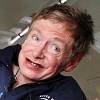 “A mountain-sized black hole would give off X-rays and gamma rays, at a rate of about 10 million megawatts, enough to power the world’s electricity supply.”
STEPHEN HAWKING
Reith Lecture, 2006
In 1931, Georges Lemaître was the first scientist to propose that the universe and time itself began in a single instant, emerging in a Big Bang. Lemaître believed the universe hatched from a ‘cosmic egg’ whose radius was similar to the earth-sun distance. In 1970, working with Roger Penrose, Hawking showed that if a Big Bang had happened and general relativity were true, then the universe must have grown from a point whose volume was zero, but which contained the entire mass of the universe. Such a point of infinite density is known as a singularity.
Interestingly, at the heart of every black hole lurks a singularity, where gravity has crushed the entire mass of the black hole into a point whose volume is zero.
Hawking was awarded the CBE in 1982, and became a Companion of Honour in 1989. He received numerous awards and medals, including becoming a Fellow of The Royal Society and a Member of the US National Academy of Sciences. He was honored with the Presidential Medal of Freedom in 2009.
Stephen Hawking was the University of Cambridge’s Lucasian Professor of Mathematics from 1979-2009, a position once held by Sir Isaac Newton. Arguably he was the most famous scientist of the early 21st century and made appearances in TV shows such as The Big Bang Theory, The Simpsons, and Red Dwarf. The 2014 movie The Theory of Everything was a drama about Hawking’s life and work.
A highly successful lecturer and author, from 1986 Hawking made use of an adaptive communication system including a speech synthesizer known as the Equalizer to combat ALS. Using the Equalizer, he authored books, scientific papers, and lectures, and was capable of communicating at the modest rate of about 15 words per minute.
Hawking’s 1988 book A Brief History of Time became an instant best-seller and was translated into 30 languages. It has sold over 10 million copies worldwide to date. His 2001 book The Universe in a Nutshell was hailed as a masterpiece of modern physics.
Personal Life:
Stephen Hawking married Jane Wilde, a language student, in 1965, and they had three children: Lucy, Robert and Tim.
The couple separated in 1991. From 2009 Hawking was almost completely paralyzed.
Stephen Hawking died peacefully, age 76, at home, on March 14, 2018, in Cambridge, UK.

No comments:
Post a Comment